
| Policy Title | Victorian Sustainable Transport Plan |
| Policy Focus Area | Efficient and Sustainable Transport Solutions |
| Tier of Government | State |
| Effective Date | 23/12/2025 |
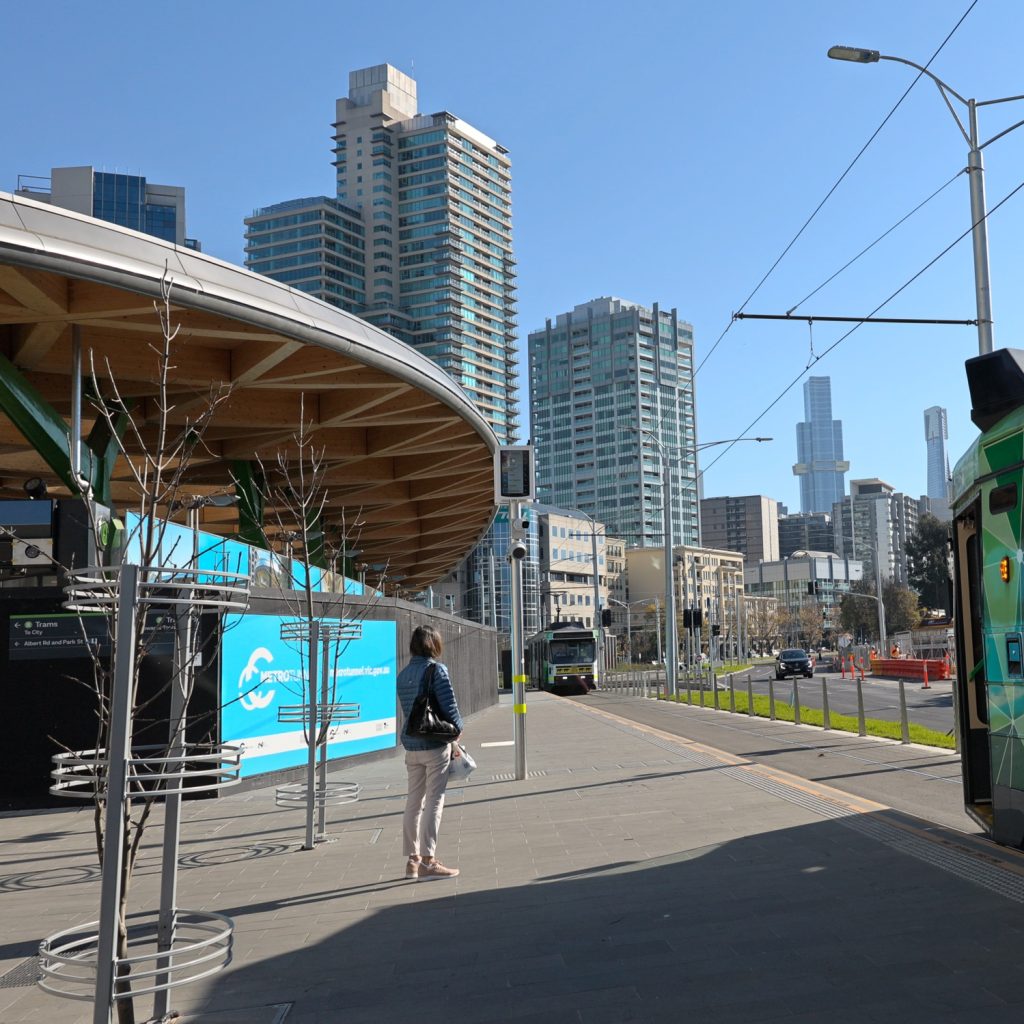
Trams at the future Anzac station
Policy Vision: To provide sustainable, affordable and accessible transportation options for residents across the state while enhancing safety and reducing environmental impact.
Evidence tells us that most people will choose the transport mode that is most convenient to them. Road transport such as private cars is not inherently the most convenient transport mode – particularly in dense urban areas. However in many parts of Melbourne and Victoria it currently is, primarily because successive governments have spent billions upon billions dollars making it so.
A significant portion of Melbourne’s freeway network – CityLink, extensions to the Eastern Freeway and EastLink itself and existing sections and widenings of the Western/Metropolitan Ring Road – have all occurred between the two most recent major expansions of Melbourne’s rail network – the City Loop in the early to mid 1980s and the Metro tunnel in 2025. Melbourne’s tram network has not been expanded significantly as the city has grown and the bus network primarily consists of slow and infrequent routes.
With such a discrepancy in funding it is no wonder that many trips around Melbourne and the state are now are significantly less convenient and take significantly greater time than driving. No surprise that this is the option people will take regardless if they want to drive or not. This has also had a significant impact on our transport emissions which can only be reduced by providing viable alternatives to driving.
While this does not mean ignoring road based transport (particularly in relation to the maintenance or improving the safety of the existing road network) it does mean that large road projects that will increase the convenience of driving compared to other transport modes, therefore inducing demand on our roads and justifying the need for even more roads will not be prioritised.
We recognise that the Suburban Rail Loop – while it should not be prioritised above other initiatives discussed here – is an important long-term backbone for an public transport system that can efficiently support a wide range journeys.
Policy Outcomes:
| Electrification of the existing rail corridors to Melton and Wyndham Vale/Tarneit and introduction of suburban rail service as an immediate priority. |
| Reconfiguration of the City Loop to seperate the Craigieburn and Upfield lines, increasing capacity (up to 18 trains per hour on each line) and reliability on these lines. Duplication of the Upfield line between Gowrie to Upfield to maximise the benefits of this reconfiguration. |
| Conversion to standard-gauge of the Ballarat/Maryborough/Ararat V/Line corridor, creating a standard-gauge route through Sunshine. |
| Reinstate rail passenger service to Hamilton/Portland, Horsham and Mildura using the existing freight-only corridors (pending viability review). |
| Investigate the viability of direct regional passenger services between Geelong, Ballarat and Bendigo. |
| Planning for a new cross-city double track rail tunnel (Melbourne Metro 2) connecting Werribee suburban services in the west, through Newport, Fishermans Bend and Fitzroy to Mernda in the north-east. |
| Planning for electrification of the existing rail corridor to Geelong and Waurn Ponds, with high frequency Metro trains from these destinations feeding into the Melbourne Metro 2 tunnel via Werribee. |
| Progressive introduction of hybrid regional trains that can run under their own power when required but take advantage of electrification when available. |
| Create a plan for the electrification of the V/Line Passenger network, prioritising intercity regional routes. |
Policy Framework:
| The development of a comprehensive Service and Capacity Framework for metropolitan Melbourne, regional cities and towns. This policy must define minimum service levels for different population densities in terms of transport mode/capacity, distance to routes, frequency and hours of service. |
| Guidelines on the level of rail service required for regional areas based on population size or the potential for commuter or tourism travel. Guidelines on level of direct rail service required between regional population centers. |
| Requirement that the service levels specified in the framework appropriate for the approved population density be provided for all newly constructed housing developments prior to residents moving in. |
| Longer term planning for new metro/train lines suggested by the Service and Capacity Framework. |
Summary: The Civil Voice Party proposes the Victorian Sustainable Transport Plan to address transportation challenges and promote a sustainable future. This plan emphasizes electrified rail transport and, through the Local Sustainable Transport Initiative, efficient tram and bus connections to offer accessible and eco-friendly travel options for residents. By enhancing safety and reducing environmental impact, the plan aims to create a better transport system for all along with healthier and more vibrant communities.
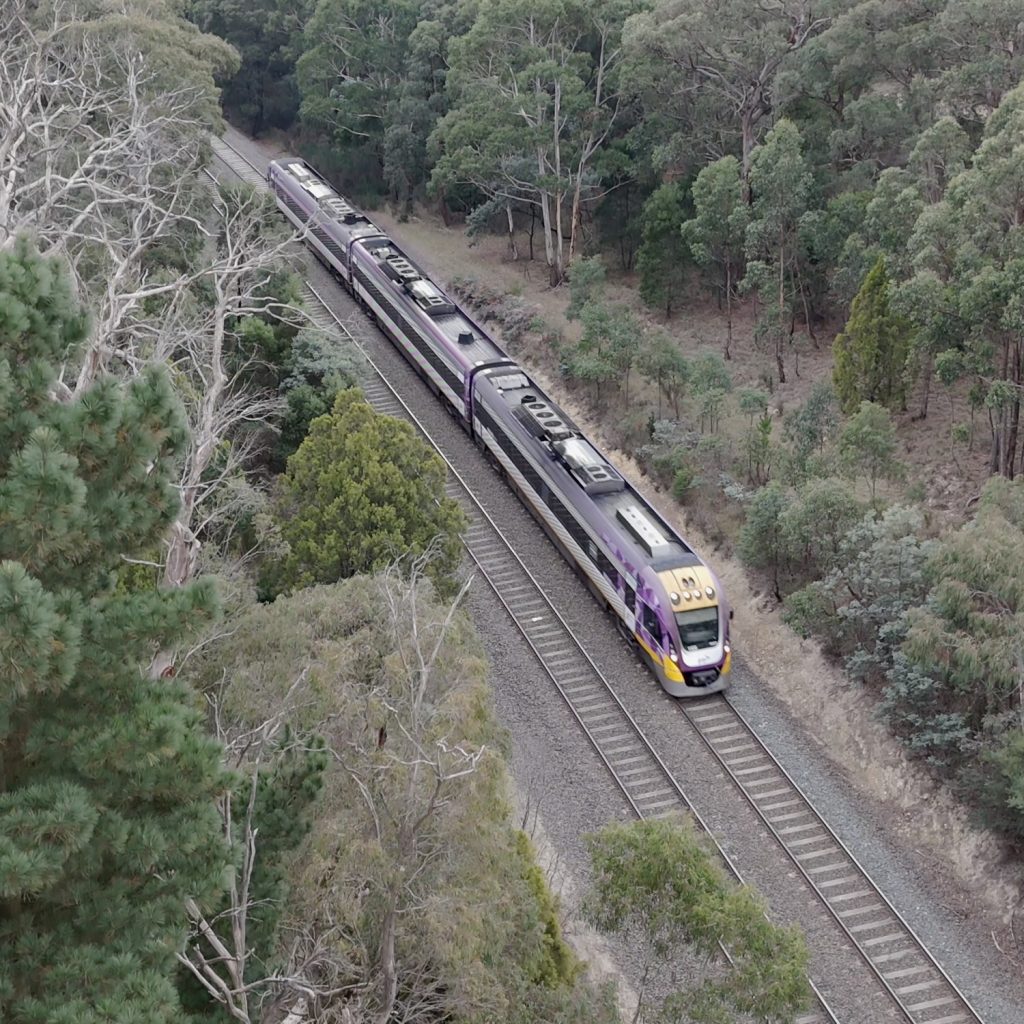
V/Line Velocity train outside of Macedon
The proposal would immediately start planning for electrified rail services to the growth areas of Melton and Wyndham Vale/Tarneit, providing much needed high frequency rail services to these areas.
Capacity of the Craigieburn and Upfield lines would also be significantly increased through a reconfiguration of the City Loop and duplication between Gowrie to Upfield. These changes would seperate these two lines for improved reliability and create two additional cross-city lines for improved movement across the citys.
Longer term, high frequency electrified rail service would be extended to Fishermans Bend and Geelong with the construction of the cross-city Melbourne Metro 2 tunnel. Construction of this tunnel would be prioritised over the Suburban Rail Loop North while recognising that completing the Suburban Rail Loop is required longer term for a sustainable city.
The progression towards converting Victoria’s regional rail to standard-gauge should continue, for increased interoperability with freight and interstate traffic. Regional train services through Ballarat would be converted to standard-gauge, solving the lack of a direct standard-gauge corridor for freight to Geelong and Melbourne from the north west of the state. This would also involve the gauge-conversion of the Kulwin freight line to Sea Lake, the Robinvale freight line to Manangatang and Geelong–Ballarat freight line and would create a standard-gauge route through to Geelong and through Sunshine to the Port of Melbourne.
Following a feasibility study, long-haul passenger service can be reinstated to Hamilton/Portland, Horsham and Mildura using the existing freight-only corridors, either as through-services from Melbourne or originating from Ballarat. Additionally, investigate the viability of direct regional passenger services between Geelong, Ballarat and Bendigo and various technologies or automation to make these services viable.
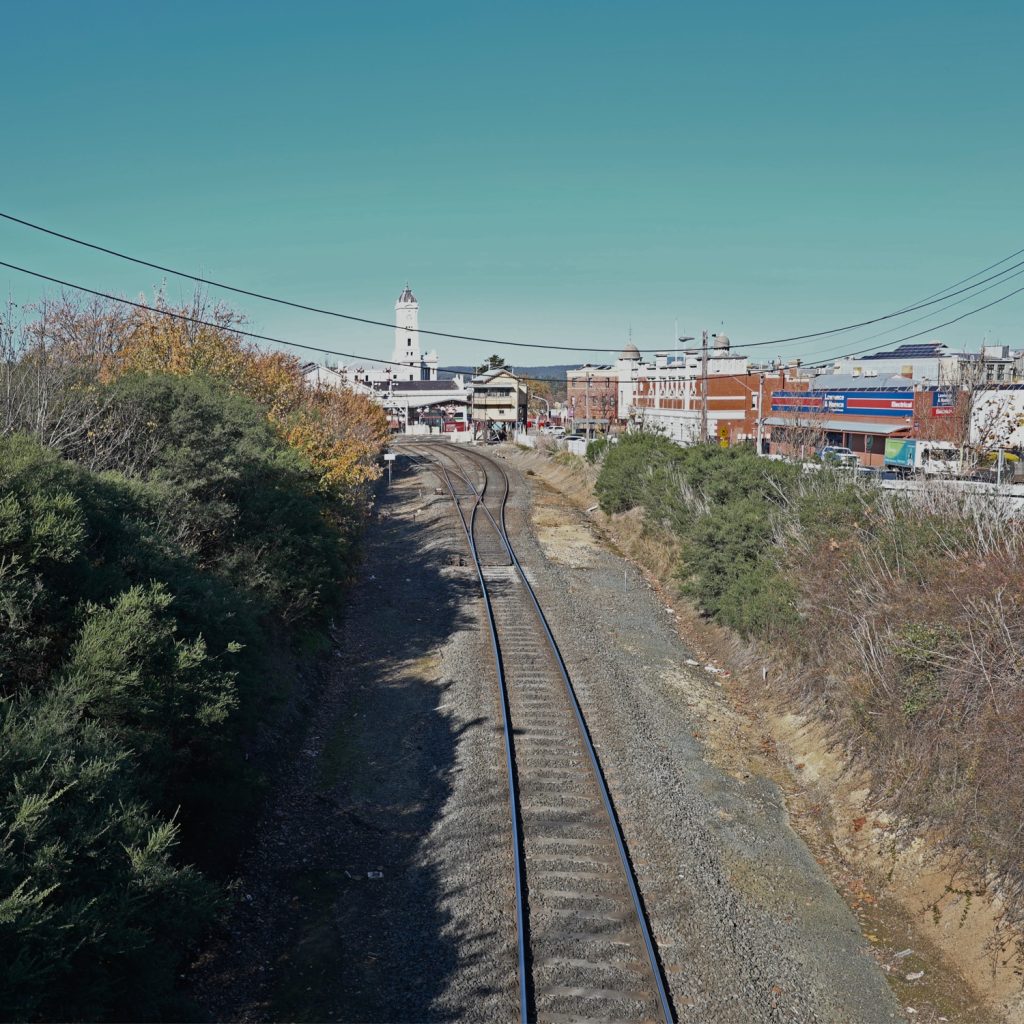
Looking towards Ballarat Train Station
V/Line would progressively introduce hybrid regional trains that can run under their own power when required but take advantage of electrification when available. This would allow for the progressive electrification of the regional passenger network starting with the intercity routes.
While this policy advocates for some specific transport outcomes, what is required longer term is a systematic approach to determining minimum service levels and prioritizing projects to ensure these levels within our cities and towns. For this, the Civil Voice Party advocates for the development of a detailed Service and Capacity Framework. This will also guarantee sufficient services in new housing areas and that the density being built is appropriately supported by the provided infrastructure.
Tags: #SustainableTransport #SafeCommute #GreenTravel #AccessibleTransit #BetterInfrastructure #PublicTransport #CivilVoice